As a result of natural ageing processes the skin and subcutaneous tissue undergo significant changes, causing the skin to become less firm and elastic. This process affects the entire human body, but loss of firmness is particularly noticeable in the female breasts. The bust, subjected to stretching and sagging, often loses its former shape after pregnancy and breastfeeding. For women who experience discomfort because of this but do not wish to undergo surgical procedures, Artisan Clinic offers a minimally invasive procedure — breast lifting with Aptos threads. The procedure gives excellent, natural results, does not require a lengthy recovery, and leaves no extensive scars (only a few millimetre-long incisions are made during the procedure to introduce the threads).
Breast Lift with Aptos Threads – Initial Consultation
During the consultation the plastic surgeon discusses the procedure details and expected result with the patient. The patient also consults with the anesthesiologist to agree on the details of anesthesia and increase its safety. Before the procedure laboratory tests are required, ordered by the specialist based on the medical history taken during the consultation.
Breast Lift with Aptos Threads – Type of Anesthesia
Local or general anesthesia.
Breast Lift with Aptos Threads – Duration
Approximately 3 hours.
Breast Lift with Aptos Threads – Course of the Procedure
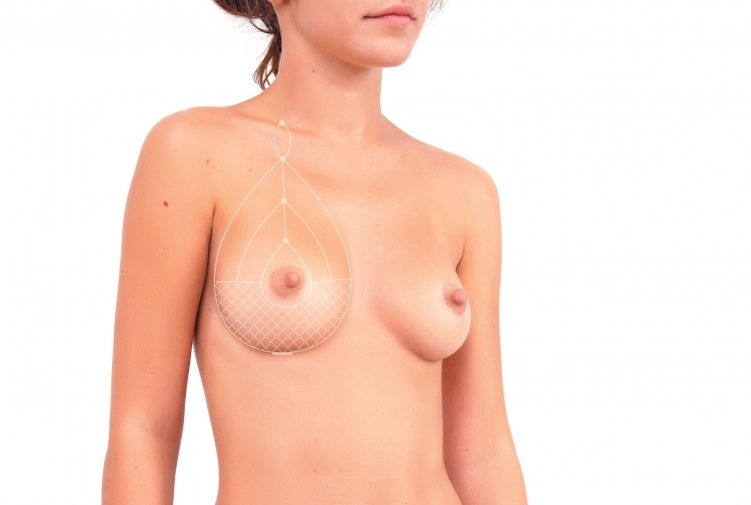
The breast lift with Aptos threads, often called the "subcutaneous bra", involves lifting the breasts and correcting their shape with threads introduced under the skin, which create a network supporting the tissues. Aptos threads, invented by Dr Marlen Sulamanidze, have remarkable properties — they stimulate hyaluronic acid production and elastin synthesis, making the skin smoother and more hydrated, while also more elastic and resilient. The procedure is performed under general anesthesia and involves introducing threads under the skin through 4 small incisions. The plastic surgeon implants the threads in a specific way, creating a network that supports the tissues. Non-absorbable polypropylene threads are used, ensuring a lasting result.
The subcutaneous bra creates a stable structure that holds the breasts. They regain their youthful appearance without a scalpel, and the results are immediately visible. The procedure can be performed in women with cup sizes up to a modest C.
Breast Lift with Aptos Threads – After the Procedure
After the procedure the patient stays for one day under the care of qualified medical staff at Artisan Clinic. Recovery time is shorter than with traditional surgery; return to work is possible after just 2 days. After the procedure a special shaping bra should be worn for approximately 3 months. Physical activity should be limited for 4 weeks.
Recovery time:
The final result is visible after 3 months.
Frequently Asked Questions
What are the advantages of breast lifting with Aptos threads?
Aptos threads, unlike other threads used in plastic surgery, not only lift the tissues giving a lifting effect, but due to their properties also rejuvenate the skin by improving its density and nourishment. Results are visible immediately after the procedure and are long-lasting. The threads are imperceptible and the procedure itself is minimally invasive. Only millimetre-long incisions are made during the procedure, after which scars are almost invisible. Subsequent pregnancy and breastfeeding do not change the position of the breasts.
What are the contraindications to the breast lift with Aptos threads procedure?
Contraindications to breast lifting with Aptos threads are: allergy (to plastic, biomaterial, non-absorbable fillers), skin infection, predisposition to keloids, autoimmune diseases (scleroderma, sarcoidosis, amyloidosis), use of anticoagulants (e.g. heparin, aspirin), haemophilia, hypertension (grade II and III), neurological and psychiatric disorders, pregnancy, breastfeeding, chemotherapy.
Does breast lifting with Aptos threads have side effects?
As with other similar procedures, there is a risk of side effects, although not all patients experience them.
Possible side effects include: swelling, temporary asymmetry, transient wrinkling, short-term bruising or haematomas, inflammation. These should subside within a few days after the procedure.